What an engine run-up pad tells you about airbase maintenance tempo
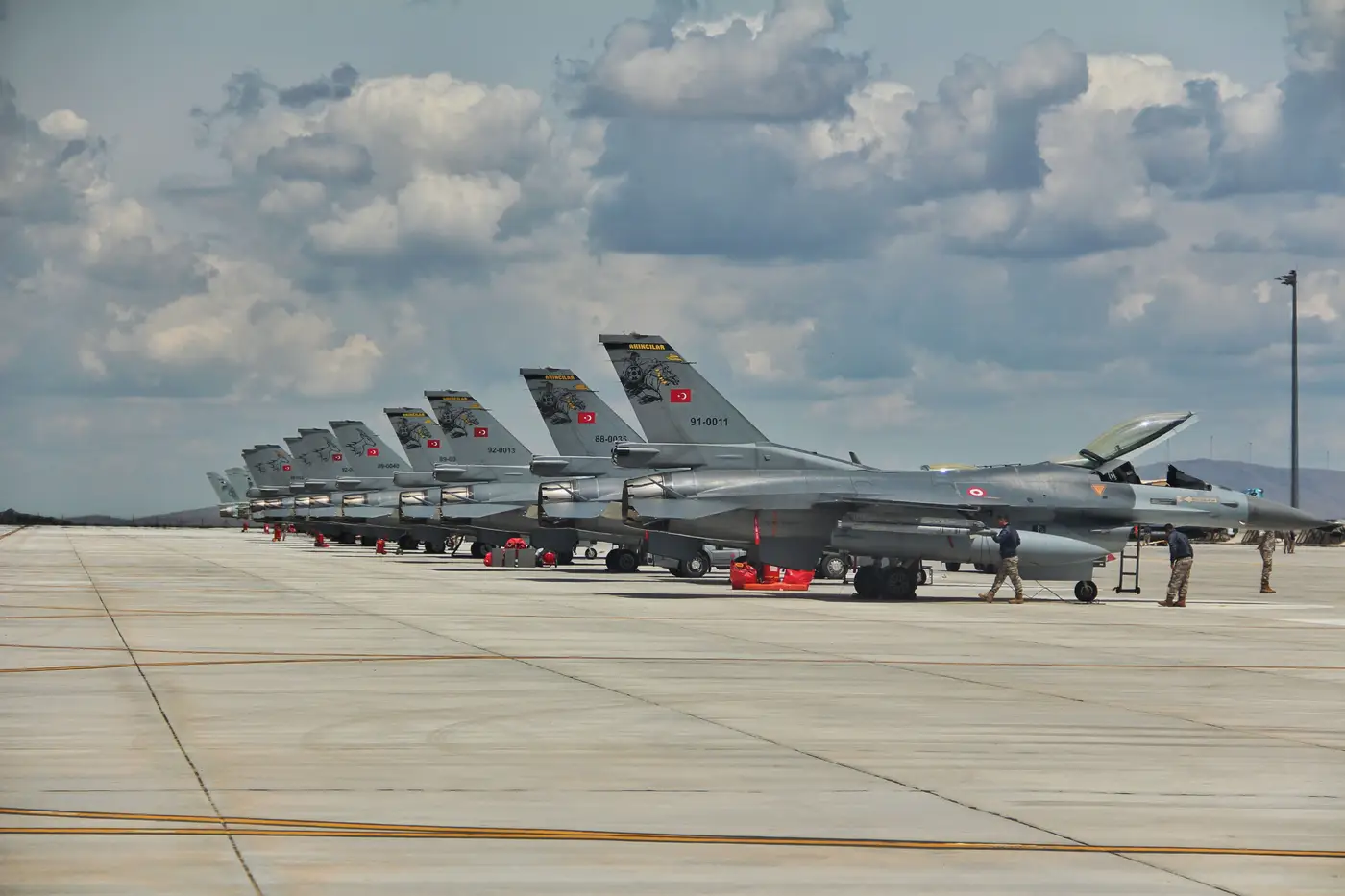
A run-up pad is the paved hardstand, usually set off the taxiway near the threshold or alongside the maintenance hangars, where ground crews run an engine at high power with the aircraft stationary. It's built with a blast fence or angled away from the main apron so the exhaust doesn't throw debris across parked aircraft. On satellite imagery it shows up as an isolated rectangle or trapezoid of concrete, often scorched or discolored from repeated engine wash, sitting apart from the normal parking rows.
Why it matters more than apron counts
Most airbase imagery work focuses on counting tails on the apron. A run-up pad is a different kind of signal. Apron counts tell you how many aircraft are present. Pad activity tells you how much maintenance work is happening on the base.
An aircraft only goes to the run-up pad after real work. Engine changes, borescope follow-ups, avionics swaps that need a ground run to verify, post-depot acceptance checks before a jet is cleared to fly again. A tail parked quietly on the apron could be fueled and ready, or it could be down for weeks waiting on a part. A tail on the run-up pad, nose into the blast fence with engines clearly spun up, is in the middle of being fixed and getting close to flying.
Reading tempo from pad activity
A single aircraft on the pad once or twice a week is routine upkeep, nothing to flag. Sustained use, several tails cycling through over a few days, or a pad that's suddenly busy after sitting empty for a month, is the kind of change worth noting. It can mean a squadron is working through a maintenance backlog ahead of a deployment, recovering from a fleet-wide engine issue, or bringing jets out of deep storage back to flyable status.
The scorch pattern itself functions as a rough maintenance activity indicator on its own. A pad with heavy discoloration and a worn surface has seen steady use over months. A clean pad at a base that otherwise shows high sortie counts is odd and worth a second look. Maybe maintenance has shifted to a different ramp, or to a different base entirely.
What to look for on the imagery
A few things separate a confirmed run-up event from an aircraft that just happens to be parked near the pad:
- Nose or tail oriented into a blast fence, not toward the main apron
- Ground vehicles positioned off to the side rather than nose-in for normal servicing
- Heat shimmer or exhaust staining in the frame, when resolution and sun angle cooperate
- The aircraft present on one pass and gone or repositioned on the next, instead of sitting in the same spot for weeks
None of these alone confirms an engine run. Together, across two or three consecutive passes, they build a pattern that holds up in a report.
Comparing day over day
Spotting a run-up pad once is easy. Noticing when the activity around it changes, day to day, is the part that matters for tracking tempo. That means checking the same corner of the same base against yesterday's tile each day, since memory of what the pad usually looks like drifts fast. Run-up pad satellite imagery is only as useful as the comparison behind it. A pad empty for three weeks that then shows a tail for four straight days is a shift worth a dated entry, not something you want to catch on day eleven because nobody flagged day one.
That's the gap Airfield Activity is built to close: a running daily log of what's parked where at a named airfield, so a run-up pad going from quiet to busy shows up on the record the day it happens.
If you're watching a base where maintenance tempo is the question, keep that pad in your rotation along with the main apron.