Alert apron vs. parking apron: what the difference means in imagery
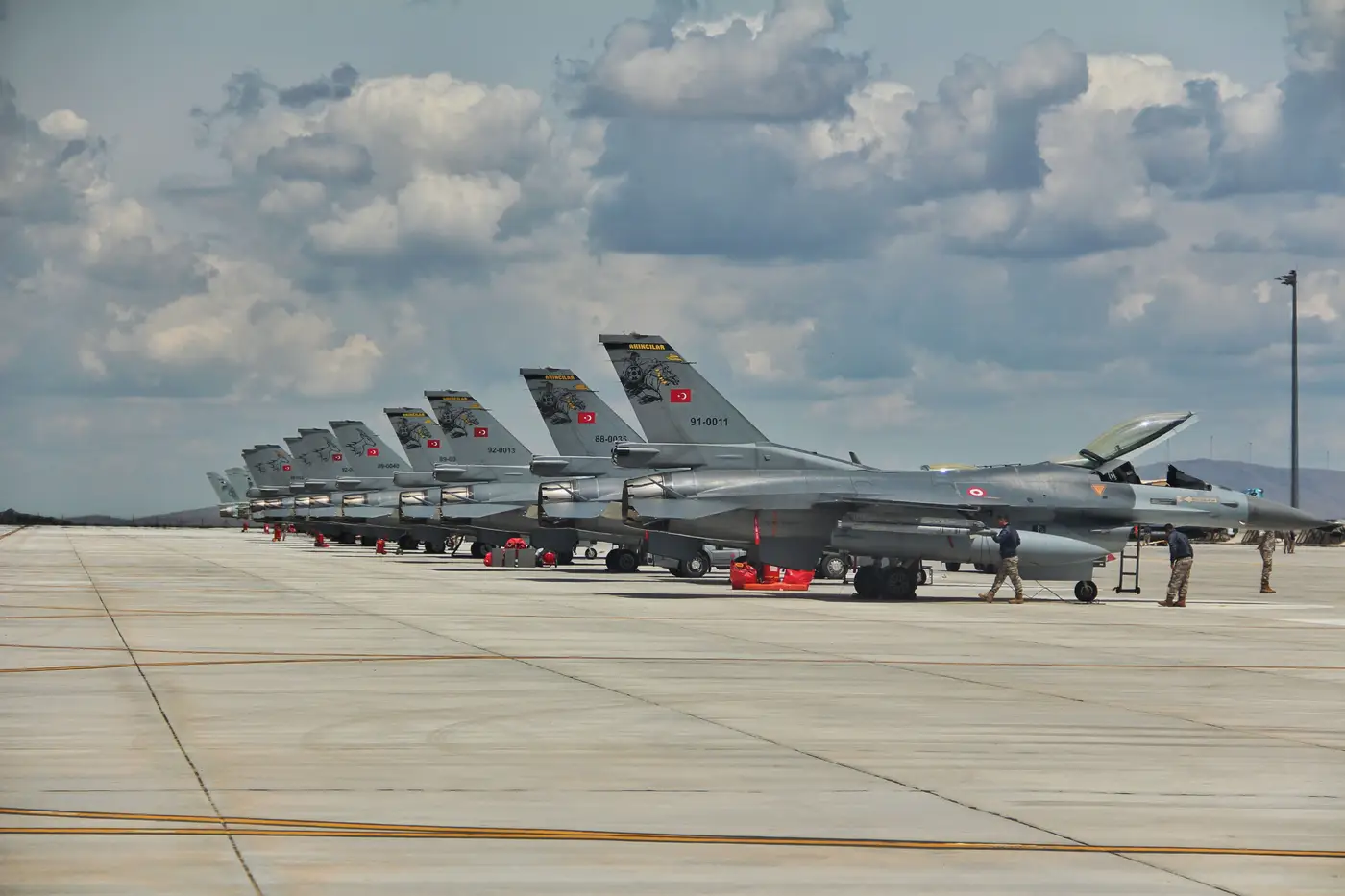
If you've spent any time staring at an airbase in VHR optical and trying to figure out what the host air force is doing with it, you've probably run into the term "alert apron" and wondered if it's just another name for the ordinary parking ramp. It isn't, and the difference tells you something real about posture.
What an alert apron actually is
An alert apron, sometimes called a QRA apron (Quick Reaction Alert apron), is a dedicated hardstand built and positioned for aircraft held at a high readiness state. These jets sit fueled, armed in many cases, and crewed or near-crewed, ready to scramble inside a defined time window, often minutes.
Because of that readiness requirement, alert aprons show up in predictable places. Look for hardstands close to the runway end, usually with a short, direct taxiway link that skips the main flight line entirely. Many are flanked by individual revetments or blast walls, sized for one or two aircraft each, rather than open tarmac shared by a squadron. On some bases you'll see a fenced or berm-enclosed compound set apart from the rest of the apron network, sometimes with its own access road. That isolation is deliberate. It limits exposure and keeps the alert jets out of the way of routine traffic.
How that differs from a parking apron
A parking apron (also called a transient ramp, line apron, or just "the ramp" depending on who's talking) is the general-purpose surface where aircraft sit when they're not flying and not on alert. This is where you'll count the bulk of a base's assigned aircraft on any given day: fighters between sorties, transports loading cargo, trainers parked overnight. It's usually adjacent to hangars and maintenance facilities, laid out in rows or herringbone patterns for efficient taxi-in and taxi-out, and its layout carries none of the urgency built into the alert pad. There's no need for a thirty-second taxi to the runway when the aircraft sitting there aren't going anywhere in a hurry.
The practical tell in imagery: parking apron occupancy fluctuates with flying schedule, maintenance cycles, and deployments. Alert apron occupancy is supposed to stay close to constant. A base holding a QRA commitment will keep that pad occupied almost every pass, even when the rest of the flight line looks half empty on a quiet weekend. When you see a persistently full three-aircraft pad tucked against the runway threshold while the main ramp cycles between full and nearly bare, you're probably looking at the alert posture, not routine basing.
Shelter construction patterns reinforce this. A new row of individual revetments going up near a runway end, separate from the existing hardened aircraft shelters elsewhere on base, is a reasonable signal that a unit is standing up or expanding an alert commitment. New construction on the general parking apron, by contrast, usually just means growth in squadron size or a basing change, with none of the urgency implications.
Why the distinction matters for daily tracking
If you're trying to answer "what changed since yesterday" at a named airfield, lumping alert aircraft parking in with the general count on the apron flattens out the signal that matters. A drop in parking-apron count might just mean a detachment flew out on exercise. A drop in alert-apron occupancy, especially a sustained one, is a different kind of observation entirely: a possible gap in readiness, a maintenance stand-down, or a shift in commitment to another base. Treating the two aprons as separate line items in your log, rather than one combined aircraft-on-base tally, is what lets you catch that kind of change instead of averaging it away.
This is exactly the kind of day-over-day read that gets lost when you're manually paging through archive tiles trying to remember what was parked where last week. Airfield Activity keeps a running log of aircraft by type across both apron types at a named airfield, alongside runway and shelter construction tracking, so the alert pad's occupancy trend doesn't get buried in the base-wide total.
If you track a specific airfield and want the alert apron watched on its own line, that's the offer worth a look.