FOL vs MOB: what actually separates a forward operating location from a main base
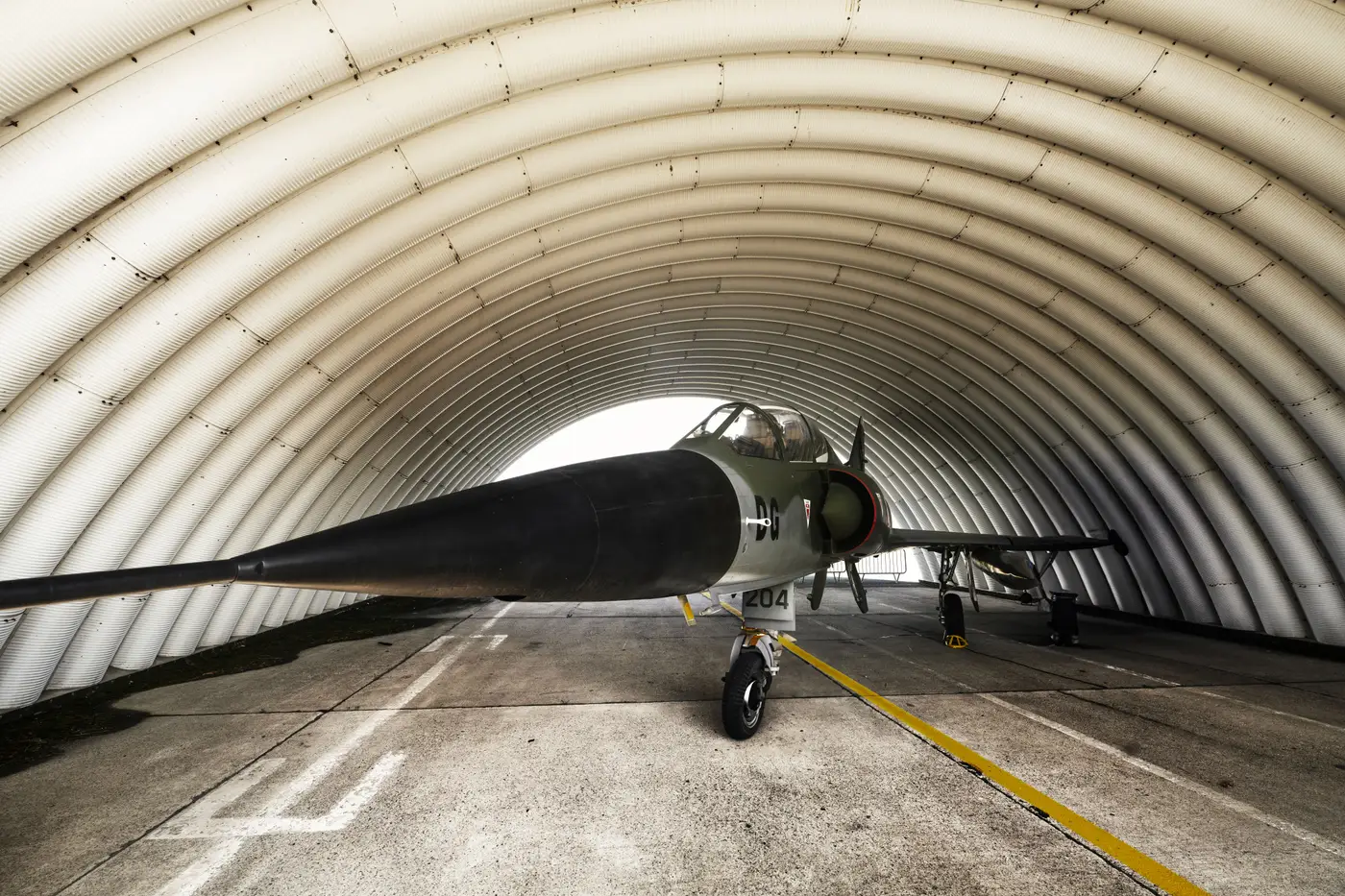
A forward operating location is a stripped-down airfield a service can surge into on short notice, fly from for days or weeks, and leave with minimal trace. A main operating base is where the squadron lives full-time: permanent party, a spares pipeline, hardened shelters built up over years, family housing down the road. The distinction is doctrine, but it also shows up in imagery, and that's the part that matters if you're the one filing the daily note.
What makes a base a MOB
A main operating base carries the weight of permanence. You see hardened aircraft shelters rather than open revetments, a fixed POL (petroleum, oil, lubricants) system instead of bladders trucked in, taxiway and runway pavement maintained to a standard that survives heavy traffic for decades, and support infrastructure that doesn't move: fire station, control tower, ammunition storage area laid out with real standoff distances. Manning is permanent party, which means the apron count on a Tuesday looks a lot like the apron count on the Tuesday before. Construction at a MOB tends to be incremental: a new shelter row here, a resurfaced taxiway there, each one visible as a slow change across months rather than a sudden one.
What makes a location an FOL
An FOL is built for tempo, not permanence. Expect open hardstands instead of shelters, fuel bladders or a temporary distribution point instead of fixed tankage, and a runway that may be shorter, unpaved, or only recently resurfaced to take the aircraft type being deployed. Manning rotates in with the detachment and rotates back out with it, so the apron can go from empty to full of airframes in the space of a week, then empty again a month later. That's the signature worth hunting for: a location with no prior pattern of occupancy that suddenly shows aircraft on the ramp, or a bare strip that gets a new taxiway or shelter pad poured in the space of a single imaging pass.
Some writers fold austere basing and FOLs into the same bucket, and functionally they usually are. Austere basing just names the condition (minimal infrastructure, minimal support) that an FOL is built to operate under. A cooperative security location, forward arming and refueling point, and bare base all sit somewhere on the same spectrum between MOB and raw dirt strip, and the posture terminology gets argued over more than the underlying pattern does. For a working analyst, the pattern is the thing that matters: fixed infrastructure and stable manning versus bladders, tents, and a rotation schedule.
Reading posture from the apron, not the org chart
None of this terminology tells you anything on its own without a baseline to compare against. A field that's been a quiet FOL for two years with the occasional transport pass through looks completely different from one that just had six fighters show up and a new revetment line started the same week. The first is routine. The second is the kind of change that belongs in a report, and it's also exactly the kind of thing that gets missed if you're relying on memory of what the last tile looked like instead of a running comparison.
That's the gap Airfield Activity is built to close: a daily log of aircraft counts by type on apron and in revetments, plus tracked runway and shelter construction, at a named field, so the shift from FOL quiet to MOB-style buildup shows up as a line in the log rather than something you have to notice by eye against last month's archive tile.
If you're already tracking a field where the posture question keeps coming up, that running log is worth a look.